How to Build a Website
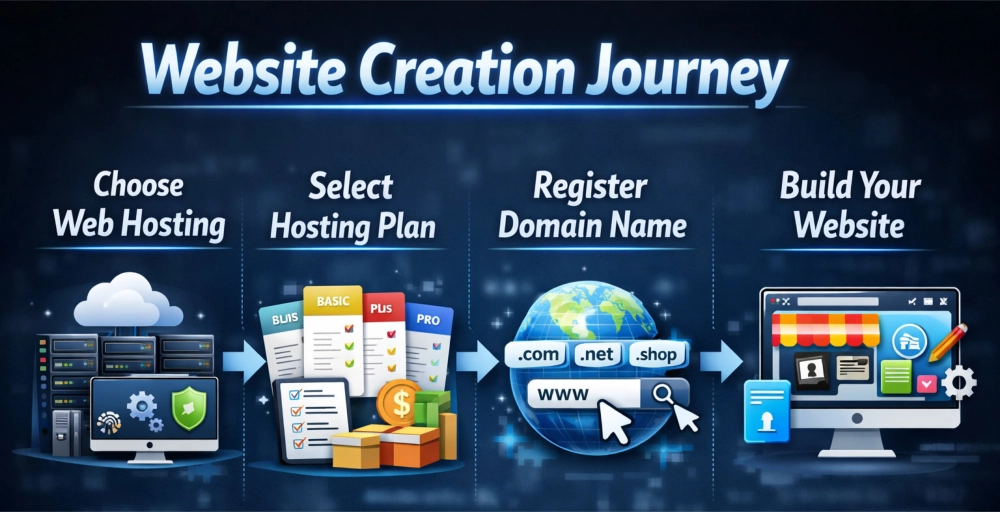
Advantages of Having Your Own Business Website
- Builds brand credibility
- 24/7 business presence
- Reaches global customers
- Boosts customer trust
- Improves online visibility
- Generates more leads
- Increases sales potential
- Low-cost marketing tool
- Showcases products easily
- Faster customer contact
- Better search rankings SEO
- Full business control
- Supports online payments
- Easy content updates
- Tracks visitor behavior
- Enhances customer support
- Strengthens brand identity
- Competes with big brands
- Expands market reach
- Creates lasting impression
Introduction: How to Build a Website
In today’s digital world, having a website is essential for
visibility, credibility, and growth. A website acts as your online home, where
people discover who you are, what you have to offer them, and how can
they connect with you. Whether you're a Business, Freelancer, or
Creative, a website helps you showcase your work, Sell Products, Share
your Story, and Build Trust. A Website is available 24/7, expands your
reach beyond local boundaries, and supports marketing, SEO, and customer
engagement. Without a website, you risk being invisible in a world that
searches online first. Simply put, your website is your most powerful
digital asset.
How To Build a Website Depends on What is the Purpose of Your Website
Before you learn how to build a website, it’s crucial to define the purpose of
the
website that you are going to build, clearly. Your website’s purpose
will guide every decision you make while you build a website, from
the website design and content to functionality and structure of your
website. You must think, are you showcasing a
portfolio, selling products, sharing knowledge, or building a community?
Knowing your goal helps you connect with the right audience through your
website and deliver meaningful experiences. A well-defined purpose
ensures your site stays focused, avoids clutter, and drives website
traffic. That will also help you
to choose the right platform to build your website, the features, and
the tone of your website. Without a clear purpose,
your website risks becoming confusing or ineffective. Start with
intention, and let that shape everything that follows.
How To Build a Website: Choose a Website Builder Platform
Most people who think about how to build a website, start by choosing the right platform based on
their goals and technical skills. A
CMS or Content Management
System like
WordPress offers flexibility and control, ideal
for Blogs and Scalable Websites.
Website_Builders are user-friendly, with drag-and-drop tools perfect for
beginners. For full customization, a custom-coded solution
using HTML, CSS, and JavaScript gives you complete design freedom but
requires coding expertise. Each option lets you manage content, design,
and functionality. Select the platform that aligns with your needs,
budget, and future growth to create a site that’s both effective and
easy to maintain.
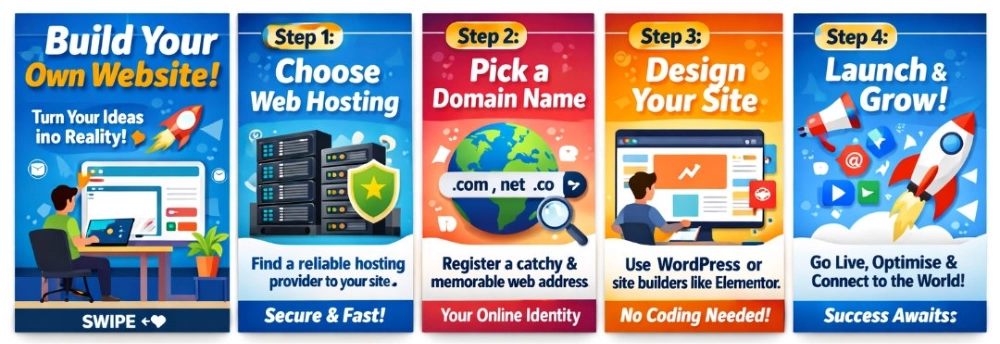
How To Create a Website: First Register a Domain Name
Before you can think how to build a website, you need a Domain Name
which is your online address that people will type into their web
browser address bar to visit your website. Choosing a unique name that
aligns with your brand and is easy to remember like this website
WebHostingShip.Com, which deals with Web Hosting. Registering your domain name is a crucial step in
building your website. Aim for a domain name that is short, simple,
and free of confusing characters like hyphens or numbers. Use keywords
that relate to your niche or business to improve discoverability. Once
you’ve brainstormed a few options, check their availability using domain
registrars like Elementor_Web_Hosting
or
Contabo_Web_Hosting or any registrar of your choice. Consider
different extensions like .com, .net, or .studio depending on your
purpose. After selecting your domain, Register that Domain name to promptly secure
its ownership. A strong domain name builds credibility, helps people find
you online, and sets the tone for your entire digital presence. Choose
wisely because it is your online identity.
How To Build a Website: Secure a Web Hosting Plan
Before you learn how to build a website it is necessary to secure a reliable web hosting plan
that is essential to ensure your
website is always online, loads fast, and is always accessible to your visitors.
Web Hosting is
the service that stores your website’s files and delivers them to users
when they visit your Domain or website. Look for providers that offer
99.99% uptime, which means your site will be available nearly
all the time without interruptions. Choose a hosting type that fits your
needs,
Shared_Hosting is budget-friendly for small
sites,
VPS_Hosting offers more control and performance,
and
Dedicated_Hosting is ideal for high-traffic
websites. Consider features like
SSL_Certificates, daily backups,
customer support, and scalability. Reputable companies like
Contabo_Web_Hosting provides robust infrastructure and security. A
good web hosting plan not only keeps your site running smoothly but also
affects speed, SEO, and user experience. Investing in quality hosting is
a foundational step toward building a trustworthy and professional
online presence.
We would recommend you
Elementor_Web_Hosting if you are starting out, because
Elementor provides a Web Hosting which you
can upgrade only when your website traffic increases beyond a certain
limit. You can even host unlimited
websites on Elementor. Elementor provides Free SSL Certificates,
Free Backups, Free Website Migration, 75000 visits a month, 75 GB
Bandwidth, 25 GB Storage, etc. Elementor web hosting is one of the best
professional webhosting especially for WordPress Websites and you get everything you need to build a
website absolutely Free saving you a lot of money.
Watch this Elementor Web Hosting Video below:
How To Build a Website: Plan Your Website Structure
When you think how to build a site the first thing that comes to
your mind should be to plan your website structure, so that it sets the
foundation for a smooth user experience. A well-organized
structure helps visitors find what they need quickly, keeps them
engaged, and improves your site’s performance in search engines. Start
by outlining your main pages by including
Home, About, Services
or Products, Portfolio or Blog, and Contact. Think about your audience’s
journey: When you build a website, think what does your audience want to see first, and where should they go next?
Use a clear navigation menu with logical categories and subpages. Avoid
clutter and keep the number of clicks to reach key information minimal.
When you build a website consider adding breadcrumbs, internal links, and a footer menu for added
accessibility. Sketch a
Sitemap to visualize how each page connects and
flows. This blueprint will guide your design and content decisions,
ensuring consistency and clarity. A thoughtful structure not only
enhances usability but also boosts credibility and conversion. When
users feel comfortable navigating your site, they’re more likely to
stay, explore, and take action. To make this process easier,
Elementor_Web_Hosting has a Sitemap and Wire Frame
maker for websites which is very good. Just describe your website in a
few words and AI will generate a wireframe structure for your website in
seconds.
How To Build a Website: Design Your Website Layout
The next step when you think of how to create a website is to design your website layout
which is all about creating a space that’s both
visually appealing and easy to navigate. Start by choosing a clean,
responsive design that reflects your brand’s personality, whether it’s
bold and modern or soft and minimalist. A responsive design is the one
that adapts to both a PC screen, a tablet screen and a mobile screen.
Remember that today, 76% of web is viewed on mobile. Hence a responsive
web design is the best with Mobile first design. Use consistent colors, fonts,
and imagery that align with your logo and messaging. Prioritize user
experience: make sure menus are intuitive, buttons are clearly labeled,
and important information is easy to find. Incorporate whitespace to
avoid clutter and guide the visitor’s eye. Ensure your layout works
seamlessly across all devices, especially mobile. Include clear
calls-to-action like “Contact Us” or “Shop Now” to drive engagement. A
well-designed layout builds trust, keeps visitors engaged, and
encourages them to explore further. Ultimately, your website should feel
like an extension of you, welcoming, purposeful, and unmistakably yours.
How To Build a Website: Add Essential Pages
Once you understand how to build a site, you also need to understand
that, there are some essential pages that are
mandatory to be added to your website, that lays the groundwork for a
clear, trustworthy, and user-friendly experience. Start with a
compelling Home page, because it’s your digital front door. This
is where visitors get a quick snapshot of who you are, what you offer,
and why they should care. Next, create an About page to
share your story, mission, and values. People connect with people, so
use this space to build trust and show the human side of your brand. A
Contact page is equally important; include a form,
email address, phone number, and links to your social media so visitors
can easily reach you. Don’t forget a Privacy Policy
page, especially if you collect user data or use cookies. Although it is
not just good practice, it is often legally required. Depending on your goals, you
might also add a Services, Portfolio,
or Blog pages when you think of how to build a website. These core pages help users navigate your
site with confidence and give your brand a professional, complete
presence. Keep the layout clean, the content clear, and the navigation
intuitive to ensure a seamless experience from the first click.
How To Build a Website: Add Additional Functionality
After you have learned how to create a website comes the next step of
adding more functionality to your website. Adding additional functionality to your website transforms it from a
static space into a dynamic, interactive experience tailored to your
audience’s needs. Depending on your goals, you can integrate features
that streamline operations, boost engagement, and drive conversions. For
example, if you’re selling products, an eCommerce system,
like Shopify or WooCommerce enables secure transactions, inventory
management, and customer accounts. If you offer services, like a
booking system lets clients schedule appointments directly from
your site, which is ideal for consultants, salons, or event planners.
Contact forms are essential for gathering inquiries, feedback,
or leads, and can be customized for different purposes. You might also
add live Chat, Membership portals, or
Email Newsletter Signups to deepen user interaction.
Most platforms offer plugins or built-in tools to make integration
seamless. Just be sure to choose features that align with your website’s
purpose and don’t overwhelm the user. Functionality should enhance, but
should not
complicate the user experience. Test each feature thoroughly to ensure it
works smoothly across devices. By thoughtfully adding tools that serve
your visitors, you create a website that’s not only informative but also
useful, responsive, and memorable. It’s about turning your site into a
living, breathing extension of your brand.
Watch this Video
How To Build a Website: High-Quality Content
When you plan how to build a site, you should already have an
excellent understanding of the topic your website you are planning to
build. Filling your website with high-quality content is key to attracting
and retaining visitors. Start by writing clear, engaging text that
speaks directly to your audience’s needs and interests. Use a friendly,
conversational tone and break up content with headings, bullet points,
and short paragraphs for easy reading. Focus on value, answer common
questions, solve problems, and highlight benefits over features.
Incorporate strong calls-to-action to guide users toward the next step,
whether it’s contacting you, subscribing, or making a purchase.
Complement your text with relevant visuals like photos, infographics, or
videos, that enhance understanding and add visual appeal. Use original
images when possible, and ensure all visuals are optimized for fast
loading. I would recommend using a vector or a png files with minimum
colors. Consistency in style, tone, and branding across your content
builds trust and professionalism. High-quality content not only informs
and inspires your audience but also improves SEO or
Search_Engine_Optimization helping your site rank
higher in search results on google, bing, etc. and reach more people organically.
How To Build a Website: Search Engine Optimize Website
You have figured out how to create a website and came this far, it is
time to optimize the website you have created. Optimizing your website for search engines is essential to improve
visibility and attract organic traffic. Start by identifying relevant
Keywords, or terms your audience is likely to search
for, and naturally incorporate them into your page titles, headings, and
content. An example is the long keyword how to build a website being
used in this page. Use a clear and compelling meta title for each
page, ideally under 60 characters, that includes your primary keyword.
Pair it with a concise meta description (under 160
characters) that summarizes the page and encourages clicks. Structure
your content with proper heading tags (H1, H2, H3), and ensure your URLs
are clean and descriptive. Add alt text to images for
accessibility and SEO, and link internally between related pages to
guide users and search engines. Make sure your site loads quickly, is
mobile-friendly, and uses HTTPS for security. Tools like
Google Search
Console can help monitor performance and identify areas
for improvement. By following these best practices, your website becomes
easier to find, more engaging to explore, and better positioned to grow.
How To Build a Website: Test and Launch Your Website
Before you start to wonder how to create a website and launch it, thoroughly test every element to
ensure a smooth user experience. Check for broken links, typing errors, and
formatting issues across all pages. Test usability on different devices
and browsers to confirm responsiveness and accessibility. Verify that
forms, buttons, and interactive features work correctly. Ensure fast
loading times and secure connections (HTTPS). Ask a few people to
navigate your site and provide feedback. Once everything runs
flawlessly, confidently publish your site. A well-tested website builds
trust, reduces bounce rates, and sets the stage for successful
engagement.
How To Build a Website: Promote and Maintain Your Website
After you create a website and launch it, the next step is promoting and maintaining your website
which is the key to long-term success.
Share your site across social media, email newsletters, and business
directories to attract visitors. Keep your content fresh by updating
blogs, portfolios, or product listings regularly. Monitor performance
using tools like
Google Analytics to track traffic, user behavior, and
engagement. Fix broken links, update plugins, and back up your site
routinely. A well-maintained website builds trust, improves SEO, and
helps you grow a loyal, engaged audience over time.
How To Build a Website: Which
Watch this How to Build a Website with Elementor_Web_Hosting: