How to Start a Blog
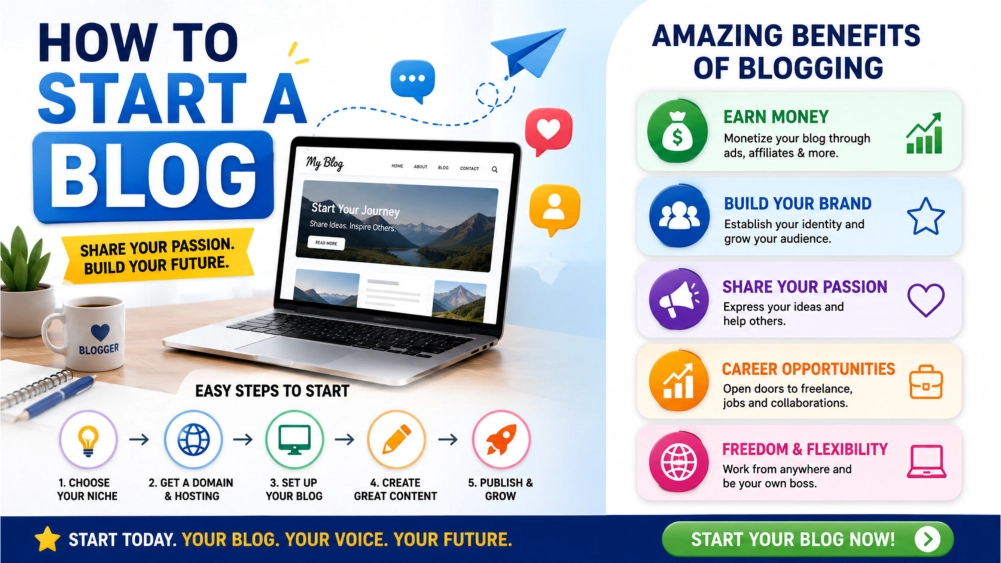
✨ Benefits of Blogging
- Earn income
- Boost SEO
- Build brand
- Show expertise
- Drive traffic
- Grow audience
- Lead generation
- Networking
- Content hub
- Customer trust
- Engagement
- Authority
- Storytelling
- Community
- Email list
- Passive sales
- Portfolio
- Feedback
- Influence
- Visibility
How to Start Blogging. A Complete Guide
Here is a comprehensive and complete article on how to start a blog, from planning
phase to publishing, plus the benefits of owning your own blogging website.
We strongly recommend you start blogging using a WordPress Website like
Elementor_Web_Hosting, that can make your blogging website
popular in the least possible time. Today, over 11% of all the new
websites in the world are created on Elementor. Over 18
million websites were created on Elementor in the past 3 years, which means
one website built on Elementor every 15 seconds, which is the reason why people have
given it more than 6.5K, 5 star ratings. You get over
100 powerful
WordPress Widgets on Elementor for every purpose imaginable.
Watch full WordPress Video Course on how to start a blogging website With Elementor_Web_Hosting
Why Start a Blogging Website?
Starting blogging is a powerful way to share your voice, build a brand, or
create income. Whether you're passionate about travel, tech, food, or
finance, blogging lets you connect with a global audience. It’s also a
great tool for personal growth, improving blogging skills, and
establishing authority in your blogging website niche. With the right strategy, a blogging
website
can evolve into a business. But success starts with clarity and
planning. Before diving into domain names or design, you need to define
your purpose, audience, and goals. That’s where the journey begins.
If you want to use your Phone to create a blogging website and that too
without writing a single line of code, everything being done visually
then we recommend you Visit
Universe_Website_Designer. Using Universe you can
design your website very fast. They have 1000's of templates, so that
you don't have to start from scratch. Select the template, make a few
changes and your blogging website is ready in 5 to 10 minutes. As easy
as that.
How to Start a Blog: Planning Your Blogging Website
You need to plan how to start a blog first. Planning your blogging
website is the foundation of your success. Start by choosing a
niche or a topic, something you’re passionate about and knowledgeable in.
To start blogging, you need to research
your target audience. What are their interests, problems, and preferred
content formats? Define your blogging website’s mission and tone. Will your blogging
website be
informative, entertaining, or inspirational? Create a content calendar
with topics and publishing frequency. Planning also includes setting
goals: Do you want to monetize your blogging website, build a community, or promote a
business? A well-thought-out blogging plan helps you stay focused and consistent
as a blog writer,
which is key to long-term growth.
How to Start a Blog: Choosing a Name for Your Blogging Website
How to start a blog begins with a blogging website name that reflects your niche
which must be memorable. Your blogging website name gives the first impression
to your readers, so make it count. Keep it short,
relevant, and easy to spell. Avoid hyphens or numbers that confuse
users. Check domain availability and social media handles to ensure
brand consistency. Once you’ve chosen a name for your blogging website, stick with it. it becomes
your identity online. A strong blogging website name builds trust and recognition,
making it easier to grow your audience and establish authority.
Registering a Domain Name for Your Blogging Website
Registering Domain Name is your first step toward owning your blogging website.
Unlike free platforms, a custom domain gives you credibility and
control. Use registrars like
Elementor or
Contabo that gives you a Free Domain Name when you choose any web
hosting plan from them along with many other facilities like Free
SSL
Cerfiticates etc.
Choose a .com
Domain_Name_Extension
if possible because it is the most recognized. Keep the domain short and
aligned with your blogging website name. Avoid trademarked terms to prevent legal
issues. Once registered, you’ll pay an annual fee (usually about $10). Owning your domain means you’re not tied to a platform’s rules
or branding. It’s a small investment with big long-term benefits.
How to Start a Blog: Selecting a Hosting Provider
Web hosting is where your blogging website lives online. It stores your files and
makes your site accessible. Choose a reliable provider like
Elementor or
Contabo. That is because once you start a blogging website, there is no looking
back as your blogging website grows to new heigts as your blog viewership runs into
millions of view per month. Look for features like 99.99% uptime guarantees,
24x7 customer support, and scalability, which both Elementor and Contabo
are known for.
Shared_Hosting is affordable for
beginners, while
VPS_Hosting
from Contabo or managed
WordPress_Hosting suits growing blogs.
Many hosts offer one-click WordPress installation, making setup easy.
But in Elementor web hosting, WordPress is already integrated and built
into their system.
Hosting costs range from $3 to $10/month. Investing in quality hosting
ensures fast load times, security, and a better user experience which is
important for retaining readers and
Search_Engine_Ranking or SEO.
Blogging Website: Installing WordPress
When you think about how to start a blog, the first thought that would come to you mind is WordPress because WordPress is the most popular blogging platform today, powering over 40% of websites. WordPress is free, flexible, and beginner-friendly. Most web hosting providers offer one-click WordPress installation (except Elementor, where WordPress is built into Elementor so that as a blog writer, you don't have to bother about installing it). Once WordPress is installed, you’ll access the dashboard where you can manage posts, pages, plugins, and themes. WordPress gives you full control over your site’s design and functionality. Unlike free platforms, you’re not limited by ads or branding. You can customize everything starting from layout to SEO settings. With thousands of plugins and themes available, WordPress adapts to any niche or style, making it ideal for serious blog writers.
Choosing a Theme for Your Blogging Website
As a blog writer, you must take the blog theme seriously, because
blog theme determines your blogging website look and feel. Choose a responsive,
fast-loading theme that matches your niche. WordPress offers free themes which are great for beginners. Premium
themes from providers offer more
customization. Look for features like mobile optimization, SEO-friendly
code, and easy navigation. A clean, professional design builds trust and
keeps readers engaged. Avoid cluttered layouts or slow-loading elements.
Your theme should support your content and not distract from it. Test
different styles until you find one that fits your brand. We would
recommend you
Elementor web hosting because they have thuosands of blog themes
available to choose from.
How to Start a Blog: Customizing Your Blogging Website
When you think of how to start a blog, you must think of cusomization
as a priority. As a blog writer, you must understand that customization
is what makes your blogging website unique. Start by adding a logo, setting
brand colors, and choosing fonts. Create essential pages: About,
Contact, Privacy Policy, and Terms of Use. Use widgets to display recent
posts, categories, or social media links.
Elementor web hosting for your blogging website because it has over a
hundred WordPress plugins and Widgets, one for every purpose imaginable. Install plugins for SEO, security, and performance.
Customize your homepage to highlight your best content. Add a menu for
easy navigation. Personal touches like author biographies or custom footers
that will
enhance your user experience. Being a Blog writer, your goal must be to make your blog visually
appealing, functional, and aligned with your brand.
Blogging Website Content Strategy
Your content strategy, as a blog writer, keeps your blog organized and purposeful. Decide on
content types: tutorials, reviews, interviews, or opinion pieces. Use
keyword research tools like Google Keyword Planner to
find topics your audience searches for. Plan pillar content, long,
valuable posts that anchor your blogging website, and cluster content that supports
it. Set a publishing schedule: weekly, biweekly, or monthly. Consistency
builds trust and improves SEO. Track performance using tools like Google
Analytics. A solid strategy helps you create content that resonates,
ranks, and converts readers into loyal followers.
How to Start a Blog: Writing Your First Post
As a blog writer, your first post sets the tone for your blog. Choose a topic that
reflects your niche and offers value. Start with a compelling headline
and introduction. Use short paragraphs, subheadings, and bullet points
for readability. Include personal insights or stories to connect with
readers. End with a call to action, ask readers to comment, share, or
subscribe. Don’t worry about perfection; focus on clarity and
authenticity. Writing gets easier with practice for any blog writer as
they understand what their readers want is the key to start blogging.
Once your blog is published, you’ll gain confidence and momentum to keep creating.
How to Start a Blog: Editing and Proofreading
As a blog writer, your should ensure that your content is polished and professional. After
writing, take a break before reviewing and editing your blog. Check for grammar,
remove any spelling mistakes, and have
clarity in what you write. Use tools like Grammarly to catch errors
and improve readability. Read aloud to spot awkward phrasing. As a blog
writer it is important to ensure
that your blog post flows logically and stays on topic. Remove fluff and tighten
sentences. Add internal links to related posts and external links to
credible sources. A well-edited post builds credibility and keeps
readers engaged. Don’t skip this step, because it separates amateur blog
writers from the
professional blog writers.
Blogging Website: Adding Visuals
When you start visualising how to start a blog, you will think of some blog you might have seen with a catchy image. Visuals enhance your blogging website appeal and comprehension. Use images, infographics, or videos to break up text and illustrate points. Free resources of high quality images and videos are available in plenty on Elementor web hosting, so you may not need to look elsewhere. Also you can generate images and videos using AI on Elementor. Optimize images for web to reduce load times. Add alt text for accessibility and SEO. Use consistent styles and colors to reinforce blog branding. Charts or diagrams help explain complex ideas. Visuals also increase social media shares. A post with images is more engaging and memorable. Just ensure visuals support your content—not distract your readers from it.
Optimizing Your Blogging Website for SEO
As a blog writer, once you have created your blogging website, wrote
content and have edited it, the next step is to optimize your blogging
website for search engines. A well SEO optimized blogging website will come
in the top of a search page for a visitor who is searching for your
blogging website topic.
Search engine optimization (SEO) helps your blog rank on Google
and other search engines like Bing, Yahoo etc. Start
with keyword research and include keywords in titles, headers, and meta
descriptions. Use SEO plugins to guide optimization of your blogging website.
As a blog writer you will have to give
descriptive URLs and add alt text to images. Link to other posts and
reputable sources. Improve site speed with caching plugins and optimized
images. Use headings (H1, H2, H3) to structure content. Mobile-friendly
design or a Responsive blogging website design is essential. SEO takes time
and effort, but pays off in organic traffic. The
more optimized your blogging website, the easier it is for readers to find you.
Setting Up Analytics for Blogging Website
As a blog writer you should know that analytics track your blogging
website performance. Google Analytics shows traffic
sources, user behavior, and popular content. Set up Google Search
Console to monitor indexing and search queries. Use these tools to
refine your strategy: Which posts get the most views? Where do visitors
drop off? What devices do they use? Analytics help you understand your
audience and improve engagement. You’ll see what works, and what doesn’t.
Regularly review metrics to guide content creation, design tweaks, and
promotional efforts. Data-driven decisions lead to faster growth of your
blogging website and
get better results.
How to Start a Blog: Building an Email List
WWhen you researched on how to start a blog, you may have come across
the topic of email list generation.
An email list is a direct line to your audience. Offer a lead
magnet like a free guide or checklist, in exchange for email signups. Add
opt-in forms to your blogging website's sidebar, footer, or pop-ups. Send regular
newsletters with updates, tips, or exclusive content. Email marketing
drives traffic to your blogging website, builds loyalty, and supports monetization. Unlike social
media, you own your viewers list. It’s unaffected by algorithm changes. Start
building early, because it is one of the most valuable assets for any
blog writer maintaining a blogging website.
How to Start a Blog: Promoting Your Blogging Website
Promotion gets your blogging
website seen by new visitors. Share posts on social media platforms
like Instagram, LinkedIn, or Pinterest. Join niche communities or forums
and contribute value. Collaborate with other blog writers for guest posts or
shoutouts. Use hashtags and SEO to increase visibility. Repurpose
your content into reels, carousels, or newsletters. Engage with your
blogging website readers
through comments and Direct Messages. Promotion is ongoing. You don’t just publish
a blow website and
wait for visitors. The more you share, the more traffic you will attract
to your blogging website. As a blog writer it is certainly important to
write fresh engaging content and publishing it regularly. But, consistent
promotion is what will build a brand awareness amongst your blogging website
readers and drives growth.
How to Start a Blog: Monetizing Your Blogging Website
Once you have traffic coming to your blogging website, you can start making money from it. Options include affiliate marketing, sponsored posts, ads, or selling products. Join affiliate programs like Amazon Associates or ShareASale. Use platforms like Google AdSense for display ads. Create digital products like ebooks, courses, or templates. Offer services like coaching or consulting.