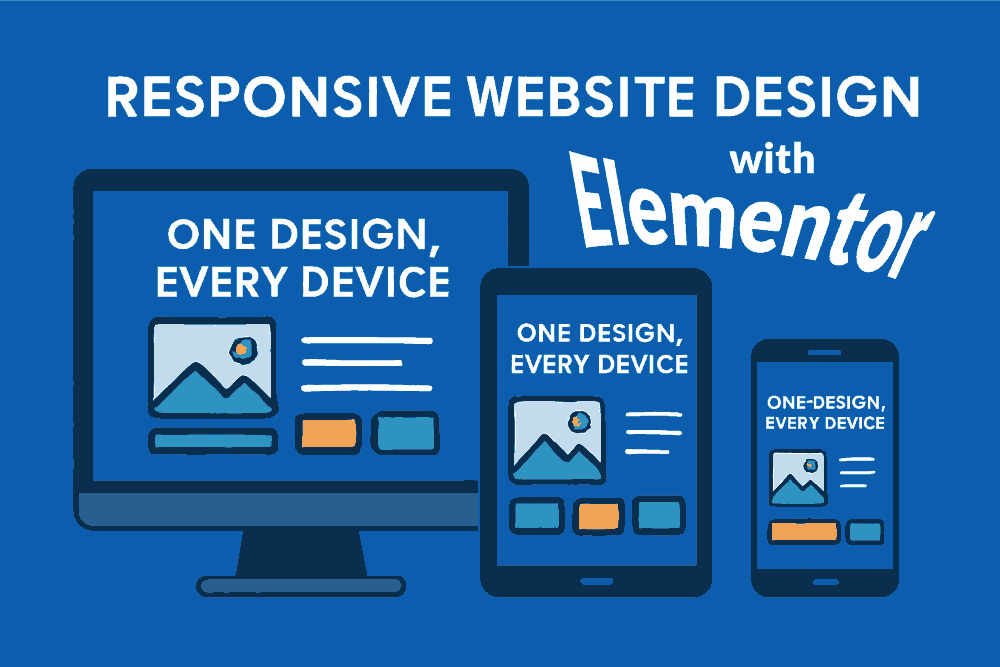
Master Responsive Design with Elementor
Elementor Web Hosting has is an outstanding tool for building responsive design without requiring any coding knowledge or prior web design experience. Elementor has an intuitive Drag-and-Drop interface allows anyone, from beginners to professionals, to create visually stunning, mobile-friendly responsive design websites that adapt seamlessly across desktops, tablets, and smartphones. With pre-designed templates, customizable widgets, and real-time editing, users can craft unique responsive website designs that reflect their brand identity while ensuring usability and accessibility. Elementor's responsive design controls make it easy to adjust spacing, typography, and images for different screen sizes, guaranteeing a flawless user experience everywhere. The platform's simplicity empowers entrepreneurs, bloggers, and small businesses to launch polished websites quickly, while its advanced features provide scalability for larger projects. By eliminating technical barriers, Elementor democratizes responsive website design, enabling creativity and innovation for all. It transforms the complex process of website creation into an enjoyable, efficient journey, making professional-quality responsive design accessible to everyone.
Elementor: The Responsive Design Game-Changer
Elementor WordPress Responsive Website Design that adapts
automatically to Computer screen, Tablet screen and Phone screen, has revolutionized the way websites are built by
eliminating the need for coding knowledge or professional design
expertise. Traditionally, creating a website with responsive design required
developers to write complex CSS and HTML, ensuring layouts adapted
across desktops, tablets, and smartphones. Elementor has changed this
paradigm with its intuitive Drag-and-Drop interface, empowering anyone
to design visually appealing, fully responsive website designs in minutes and
effortlessly. The Elementor platform provides pre-built templates, customizable widgets, and
real-time editing, making it accessible to beginners while still
offering advanced features for professionals. Its mobile-first approach
ensures that every design automatically adapts to different screen
sizes, maintaining consistency and usability. By revolutionalizing
responsive website
design, Elementor allows entrepreneurs, bloggers, and small businesses
to launch polished responsive website design quickly, while agencies and developers
benefit from scalability and efficiency. This blend of simplicity and
power makes Elementor a true game-changer in responsive design.
Mobile-First Responsive Design Philosophy
One of Elementor's most powerful responsive design capabilities is its mobile-first
design philosophy. In today's digital landscape, mobile traffic often
surpasses desktop usage, making it essential to prioritize smaller
screens during the responsive design process. Elementor enables users to switch
seamlessly between desktop, tablet, and mobile views, ensuring that
every element is optimized for each device. Beginners can start with
mobile website layouts, adjusting spacing, typography, and images to fit smaller
screens, then expand to larger devices. This approach guarantees that
websites remain functional and visually appealing across all platforms.
The YouTube tutorial emphasizes starting with mobile-first design,
showing how Elementor has responsive design controls that allow edits to cascade
across devices. For example, adjusting padding or font size in mobile
view automatically adapts the design for tablets and desktops. This
ensures consistency while saving time. By focusing on mobile-first
design, Elementor empowers users to deliver flawless user experiences
regardless of device.
Responsive Design: Breakpoints and Device Control
Elementor has responsive design capabilities which are enhanced by its
customizable breakpoints. Breakpoints define how a website layout
adjusts at specific screen widths, ensuring that content remains
accessible and visually balanced across devices like PC, Tab and Phone. Elementor
responsive design templates provides
default breakpoints for desktop, tablet, and mobile, but users can add
custom breakpoints to target specific screen sizes, such as large
monitors or small smartphones. This flexibility allows website designers to
fine-tune layouts for unique audiences. For beginners, the process is
simple: switch to the desired device view, make adjustments, and preview
changes instantly. The tutorial demonstrates how hierarchical changes
cascade across devices, meaning edits made at one breakpoint can apply
to others unless overridden. This ensures efficiency while maintaining
control. By offering granular device control, Elementor empowers users
to create websites that look professional on any screen, eliminating the
frustration of distorted layouts or inaccessible content. Breakpoints
make responsive design precise, adaptable, and user-friendly.
Fluid Layouts with Responsive Design
A key aspect of responsive design is fluid layouts, and Elementor
excels in this area by supporting responsive units such as percentages
(%), viewport height (vh), viewport width (vw), and relative units like
em and rem. These units ensure that elements in the responsive design scale proportionally across
different screen sizes, maintaining balance and usability. For example,
setting a container width to 80% allows it to adapt dynamically to any
screen, while using vh or vw ensures elements adjust based on the
viewer's screen dimensions. Beginners can apply these units easily
through Elementor interface without writing CSS. The video tutorial
above
highlights how fluid layouts prevent rigid designs that break on smaller
screens. By combining responsive units with Elementor's Drag-and-Drop
editor, users can create flexible, responsive website designs that remain visually
consistent across devices. This responsive design capability transforms complex coding
tasks into simple clicks, making fluid layouts accessible to everyone
and ensuring websites deliver seamless user experiences.
Responsive Design: Typography Scaling Across Devices
Typography plays a very important role in responsive design, and Elementor
provides powerful tools to ensure text remains legible and visually
appealing across devices. With responsive design typography controls, users can
adjust font sizes, line heights, and spacing for desktop, tablet, and
mobile views individually. This ensures that headlines remain impactful
on large screens while body text stays readable on smaller devices. Elementor
responsive website design also supports relative units like em and rem, allowing fonts
to scale proportionally with screen size. Beginners can experiment with
typography settings directly in the editor, previewing changes
instantly. The youtube video tutorial above emphasizes scalable typography as a cornerstone
of responsive design, showing how flexible units maintain consistency
across breakpoints. By simplifying typography adjustments, Elementor
eliminates the need for complex CSS media queries. This empowers users
to create professional-quality responsive website designs where text adapts seamlessly,
enhancing readability and user engagement across all devices. Typography
scaling ensures design harmony everywhere.
Image Optimization for Responsive Website Design
Images are vital for engaging websites, but they can pose challenges
in responsive design. Elementor addresses this by offering tools to
optimize images for different devices. Users can set image sizes, aspect
ratios, and alignment separately for desktop, tablet, and mobile views.
Background images can be adjusted to fit or cover screens, ensuring they
remain visually appealing without distortion. Elementor also supports
lazy loading and modern formats like WebP, improving performance and
load times. Beginners can easily configure these settings through the
editor, avoiding the need for manual coding. The tutorial demonstrates
how to optimize images so they scale correctly across devices,
maintaining clarity and impact. By simplifying image management,
Elementor responsive design ensures that websites remain fast, accessible, and visually
consistent. This capability is important for better or user experience and
SEO, as
optimized images reduce bounce rates and improve rankings. Elementor
makes responsive image design effortless and effective.
Responsive Design Controls for Device-Specific Content
Elementor's visibility controls allow users to tailor content for
different devices, enhancing usability and engagement. With these
responsive design controls, elements can be shown or hidden depending on whether the site
is viewed on desktop, tablet, or mobile. For example, a large image
slider may be perfect for desktops but unnecessary on mobile, where a
simplified version improves performance. Beginners can apply visibility
settings with a single click, ensuring that each device displays only
the most relevant content. The tutorial highlights how visibility
controls streamline responsive website design by reducing clutter and optimizing
user experience. This feature also supports strategic responsive design choices,
such as displaying mobile-specific call-to-action buttons or hiding
complex layouts on smaller screens. By offering device-specific content
management, Elementor empowers users to create responsive website
designs that feel
customized for every viewer. Visibility controls enhance responsiveness,
ensuring that websites remain functional, fast, and engaging across all
platforms.
SEO Benefits of Responsive Design
Responsive design isn't just about aesthetics. It directly impacts
SEO or
Search_Engine_Optimization and your repsonsive website
design performance. Search engines like Google prioritize
mobile-friendly websites, rewarding them with higher rankings. Elementor responsive design capabilities ensure that websites meet
these criteria effortlessly. By optimizing layouts, typography, and
images for all devices, Elementor reduces bounce rates and improves user
engagement, both critical SEO factors. The platform also supports
fast-loading designs with lazy loading and modern image formats, further
enhancing performance. Beginners benefit from built-in SEO-friendly
features without needing technical expertise. The YouTube video tutorial
above highlights
how responsive design improves accessibility and usability, aligning
with Google's mobile-first indexing. By simplifying responsive design, Elementor empowers users to create websites that not only look
professional but also perform well in search results. This combination
of design and SEO benefits makes Elementor as a Responsive Design tool, invaluable for
businesses and individuals seeking online visibility and success.
Responsive Design Interactive Elements for Mobile Usability
Responsive design isn't just about visuals, it is also about usability. Elementor excels at creating interactive elements that adapt seamlessly
to mobile devices. Buttons, forms, and navigation menus can be
customized for tap-friendly interactions, ensuring accessibility on
smaller screens. For example, buttons can be resized and spaced
appropriately for touch input, while mobile menus can be converted into
collapsible icons. Beginners can configure these settings easily through
Elementor responsive design control interface and previewing changes instantly. The
youtube video tutorial
above also emphasizes designing tap-friendly interactive elements, showing how to
optimize buttons and floating icons for mobile users. By simplifying
interactivity, Elementor ensures that websites remain functional and
engaging across devices. This capability is important for conversions, as
mobile users expect intuitive navigation and responsive call-to-actions. Elementor transforms complex usability challenges into simple design
choices, empowering users to create responsive website design that not only look stunning
but also deliver seamless, interactive experiences everywhere.
Elementor: The Ultimate Responsive Design Tool
Elementor stands out as a platform that democratizes responsive website design, making responsive website creation accessible to everyone. Its Drag-and-Drop interface, mobile-first philosophy, customizable breakpoints, fluid layouts, scalable typography, optimized images, visibility controls, and interactive elements combine to deliver professional-quality websites without coding. The YouTube tutorial above, reinforces how simple and effective Elementor's responsive design process is, guiding users step-by-step through adjustments that ensure flawless performance across devices. By eliminating technical barriers, Elementor empowers entrepreneurs, bloggers, small businesses, and agencies to create stunning responsive website designs quickly and efficiently. Its blend of simplicity and advanced features ensures scalability, making it suitable for projects of all sizes. Beyond aesthetics, Elementor enhances usability, SEO, and performance, driving engagement and success. In essence, Elementor transforms the complex art of responsive web design into an enjoyable, accessible journey, proving that anyone can build a beautiful, functional website with just a few clicks. Did you know that one website is made on Elementor every 15 seconds for the past few years. Over 13% of sites in the world are now created on Elementor.